
 Posted Bydailyst
For dental students, mastering the transition from clinical diagnosis to final restoration is one of the most important milestones in dental education. Modern dental schools are no longer limited to textbook learning or passive observation. With the right pre-clinical training models, students can walk through the entire restorative workflow — from tooth preparation to crown delivery — before ever treating a real patient.
Why Pre-Clinical Simulation Training Matters
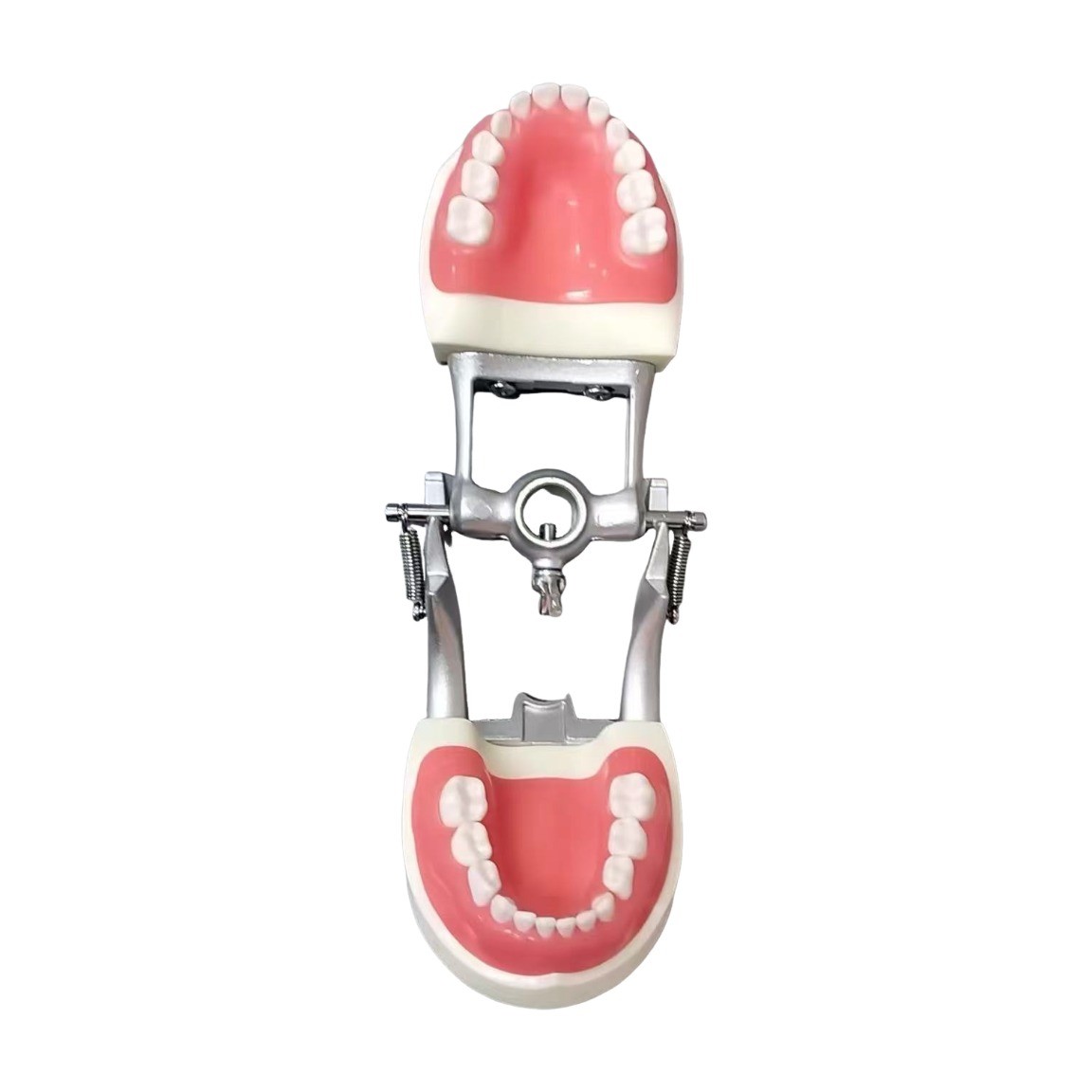
A phantom head typodont is a must-have teaching model for dental schools, training centers, and private practice educators. It gives students a controlled, repeatable environment to develop the foundational skills that define clinical competence. Basic crown preparation and handpiece control are the core of pre-clinical training — and both require consistent practice under realistic conditions before a student can perform confidently chairside.
The Frasaco-style phantom head typodont simulates natural jaw resistance and opens to a full 180 degrees, allowing students to practice from multiple angles and body positions. A standard 28 or 32 screw-in teeth snap securely into the model, and each tooth can be individually removed or replaced. Students drill prepared tooth forms using their handpiece, adjusting their posture, grip, and approach just as they would with a real patient — without any clinical risk.
Integrating the Digital Workflow: From Preparation to CAD/CAM Fabrication
What makes modern pre-clinical simulation especially powerful is how seamlessly it connects to real laboratory fabrication. After completing a tooth preparation on the typodont, the student uses an intraoral scanner to capture a digital impression directly from the training model. The high-opacity resin teeth and removable elastic gingival mask on quality phantom head typodonts are fully compatible with intraoral scanning systems, producing accurate digital data that mirrors clinical conditions.
That scan data is then shared with a dental laboratory — in-house or outsourced — where a dental technician uses CAD software to design the restoration digitally. A 3D printer fabricates a working arch model that replicates the simulated oral structure, and a CAD/CAM milling machine produces the zirconia crown with precise anatomical form. The entire digital chain — from impression to design to milling — runs exactly as it would in a real clinical case.
Closing the Loop: Crown Try-In and Bonding Simulation
Once the milled zirconia crown returns to the dental school or training center, students complete the final step: simulated bonding and crown delivery. They practice seating the restoration, checking occlusion, and applying bonding protocol on the same phantom head typodont where the preparation began. This closed-loop simulation gives students a full understanding of how each clinical decision affects the final result — and why precision at every stage matters.
This end-to-end workflow — tooth preparation, digital impression, laboratory fabrication, and restoration delivery — is no longer exclusive to advanced clinical rotations. With the right training equipment, dental schools can build this entire experience into the pre-clinical curriculum, giving students a decisive advantage when they enter patient care.
Building Your Pre-Clinical Training Program
The quality of a pre-clinical program depends directly on the quality of its training models and equipment. A reliable phantom head typodont with removable screw-in teeth, a soft gingival mask, and intraoral scanner compatibility is the foundation of any serious simulation curriculum. Paired with digital impression technology and a CAD/CAM-capable laboratory, it creates a training environment that genuinely prepares students for modern dental practice.
For dental schools and laboratories looking to build or upgrade their pre-clinical simulation setup, Dentsma offers a complete range of teaching models, dental training equipment, digital tools, and laboratory supplies — everything a program needs, in one place.
The future of dental education is simulation-driven, digitally integrated, and clinically relevant. Start your students at the beginning of the workflow — and train them all the way to the end.